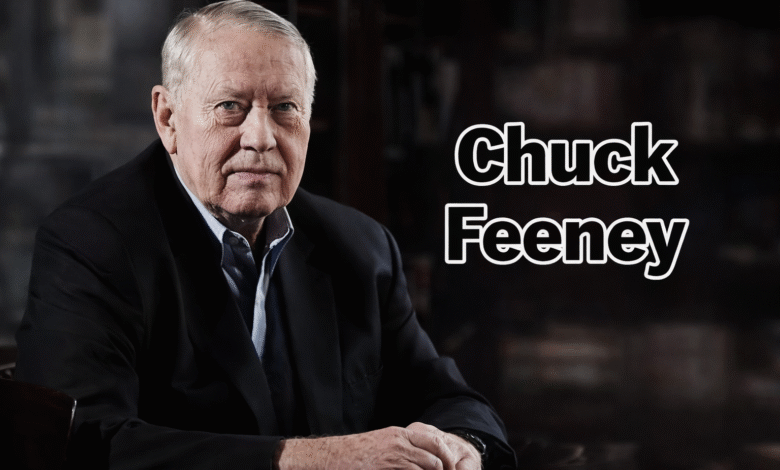
Chuck Feeney is one of the most remarkable figures in modern philanthropy, not because of how much wealth he accumulated, but because of how completely he gave it away. In a world that often celebrates excess, Feeney chose restraint. In an era of public recognition and naming rights, he chose anonymity. His life story reads less like that of a traditional billionaire and more like a moral challenge to how society defines success, wealth, and legacy.
This article explores the life, philosophy, and lasting impact of Chuck Feeney—an entrepreneur who quietly reshaped global philanthropy and proved that generosity, when practiced boldly, can change the world.
The Early Life That Shaped Chuck Feeney
Chuck Feeney was born in 1931 during the Great Depression, a time when frugality was not a lifestyle choice but a necessity. Raised in a working-class Irish-American family, he absorbed lessons about money early: save what you can, waste nothing, and help others when possible. These values would stay with him for the rest of his life.
After serving in the U.S. Air Force, Feeney attended Cornell University using the GI Bill. Even as a student, he showed entrepreneurial instincts, selling duty-free goods to fellow servicemen traveling overseas. What began as a modest operation soon evolved into something far larger—and more influential.
Building Wealth Through Duty-Free Shoppers
Chuck Feeney co-founded Duty Free Shoppers (DFS) in the 1960s, pioneering the global duty-free retail model. The business exploded in scale, operating in major airports around the world and catering to international travelers. DFS became enormously profitable, quietly turning Feeney into a billionaire.
Yet from the outside, you would never have known “Chuck Feeney” belonged among the ultra-wealthy. He avoided luxury, lived in modest apartments, and famously flew economy class. Unlike many entrepreneurs of his stature, he had no interest in displaying wealth or building a public persona around success.
For Feeney, money was never the destination—it was a tool.
The Birth of a Radical Idea: Giving While Living
Long before philanthropy became fashionable among billionaires, Chuck Feeney adopted a radical philosophy known as “giving while living.” He believed that wealth should be distributed during one’s lifetime, when it could do the most good, rather than locked away in endowments or wills.
In 1982, he quietly transferred nearly all of his ownership stake in DFS into a private philanthropic foundation. This foundation, later known as Atlantic Philanthropies, became the primary vehicle through which Feeney would give away his fortune.
For years, his charitable giving was conducted almost entirely in secret. Universities, hospitals, and public institutions received massive donations without knowing the identity of their benefactor. Feeney did not want buildings named after him. He wanted results.
Atlantic Philanthropies and Global Impact
Atlantic Philanthropies focused on areas where long-term investment could produce systemic change. Education, public health, medical research, human rights, and social equity were central priorities.
Universities benefited from transformational gifts that funded research, expanded access, and modernized facilities. Public health initiatives improved healthcare systems, especially in underserved regions. Programs supporting peace-building, aging populations, and social justice helped shape public policy in meaningful ways.
What made Chuck Feeney’s philanthropy unique was not just the scale—estimated at over $8 billion—but the strategy. He emphasized measurable impact, accountability, and partnerships with governments and institutions to ensure sustainability.
A Life of Simplicity and Principle
Despite having access to immense wealth, Chuck Feeney lived with extraordinary simplicity. He owned no luxury homes, wore inexpensive clothing, and carried a modest watch purchased decades earlier. His lifestyle choices were not performative; they were deeply consistent with his beliefs.
Feeney once said he saw no reason to spend money on himself when it could improve the lives of others. This personal discipline gave moral weight to his philosophy. He wasn’t merely advising generosity—he was embodying it.
This approach stands in stark contrast to the modern culture of conspicuous consumption and publicized philanthropy. Chuck Feeney demonstrated that humility and effectiveness can coexist with enormous influence.
Influence on Modern Billionaire Philanthropy
Although he avoided the spotlight, Chuck Feeney’s ideas quietly influenced a new generation of philanthropists. His commitment to giving while living helped popularize the concept among wealthy individuals who began to rethink traditional models of charitable giving.
Many high-profile philanthropic pledges that emerged in later decades echo principles Feeney practiced long before they were widely discussed. While others gained public recognition for their commitments, Feeney had already completed much of his mission in silence.
His story challenges the assumption that generosity requires visibility to be meaningful.
Completing the Mission: Giving It All Away
One of the most extraordinary aspects of Chuck Feeney’s life is that he succeeded in his goal. By the time Atlantic Philanthropies closed its doors, Feeney had given away nearly his entire fortune. At the end, his personal net worth was reported to be modest—by design.
Rather than leaving behind a massive endowment or family dynasty, Feeney left something far more powerful: a blueprint for purposeful wealth. His satisfaction came not from accumulation, but from completion.
He proved that it is possible not only to give generously, but to finish the job.
The Enduring Legacy of Chuck Feeney
Chuck Feeney’s legacy is not a single institution or monument. It lives in educated students, improved healthcare systems, strengthened communities, and lives quietly changed across the globe.
Perhaps more importantly, his life raises a timeless question: what is wealth for? Is it meant to elevate the individual, or to serve the collective? Feeney answered that question with action, not rhetoric.
His example continues to resonate in conversations about ethics, capitalism, and responsibility. In a time of growing inequality, the story of Chuck Feeney feels more relevant than ever.
Conclusion
Chuck Feeney showed the world that true success doesn’t require applause. His life stands as a quiet challenge—to entrepreneurs, leaders, and everyday readers alike—to think more deeply about purpose, generosity, and impact.
At Techstrand, stories like Chuck Feeney’s remind us that innovation isn’t limited to technology or business models. Sometimes, the most powerful innovation is a new way of living—and giving.