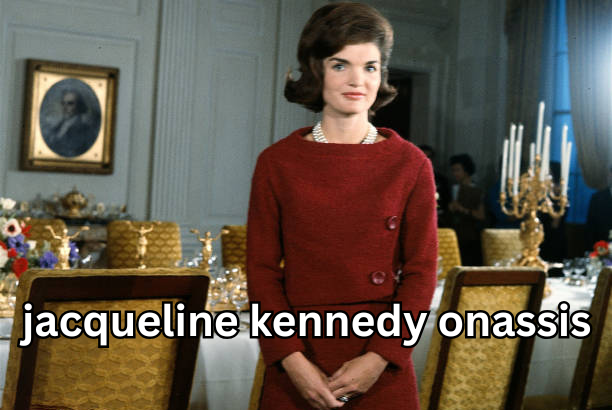
Jacqueline Kennedy Onassis was an American First Lady, editor, preservation advocate, and cultural icon whose influence reached far beyond politics. Born Jacqueline Lee Bouvier on July 28, 1929, in Southampton, New York, she became internationally recognized after marrying Senator John F. Kennedy in 1953.
Following President Kennedy’s assassination in 1963, she displayed remarkable strength under unimaginable circumstances, becoming a symbol of dignity and grace. Later, her marriage to Greek shipping magnate Aristotle Onassis introduced another chapter in her life and eventually led to the name by which many people know her today—Jacqueline Kennedy Onassis.
Although remembered for her impeccable style, her greatest achievements included historic preservation, support for literature, and promoting American culture around the world.
Early Life and Education
Jacqueline grew up in a privileged but demanding environment. She developed an early love for reading, history, horseback riding, and the arts.
She attended prestigious schools before studying at Vassar College. Later, she continued her education in France, where she developed a lifelong appreciation for European culture, architecture, and languages. She eventually graduated from George Washington University with a degree in French literature.
Friends often described her as curious, disciplined, and intellectually ambitious—qualities that later shaped both her public role and professional career.
One lesser-known fact is that Jacqueline’s passion for books began long before she entered publishing. Family members recalled that she frequently preferred libraries and museums over high-profile social events, a trait that remained consistent throughout her life.
Jacqueline Kennedy Onassis Siblings
Many readers search for jacqueline kennedy onassis siblings because her family life is often overshadowed by her years in the White House.
Jacqueline had one younger sister, Lee Radziwill, who became a well-known socialite, actress, and public figure. The two sisters shared a close but sometimes complicated relationship throughout their lives.
After their parents divorced, Jacqueline also gained two half-siblings through her mother’s marriage to Hugh D. Auchincloss Jr. Their blended family reflected the changing dynamics of American upper-class society during the mid-twentieth century.
Despite occasional differences, family remained important to Jacqueline, particularly during difficult periods following national tragedies.
Marriage to John F. Kennedy
Jacqueline married Senator John F. Kennedy on September 12, 1953, in Newport, Rhode Island.
The wedding immediately became one of America’s most celebrated social events, attended by hundreds of guests and widely covered by newspapers.
As John’s political career advanced, Jacqueline became an increasingly important part of his public image. Rather than simply attending events, she helped shape campaign messaging through her multilingual skills, cultural knowledge, and ability to connect with international audiences.
Historians often note that Jacqueline transformed the traditional role of First Lady by emphasizing history, arts, diplomacy, and education instead of limiting the position to ceremonial appearances.
Jacqueline Kennedy Wedding Dress
One of the most searched topics remains the jacqueline kennedy wedding dress.
Designed by African American fashion designer Ann Lowe, the ivory silk taffeta gown featured a portrait neckline, fitted bodice, and dramatic full skirt. Although Jacqueline reportedly preferred a simpler design, family expectations favored a more traditional bridal gown.
Today, the dress is considered one of the most influential wedding gowns in American history.
Its timeless elegance continues to inspire bridal designers decades later because it balanced sophistication with classic style rather than following temporary fashion trends.
An interesting detail often overlooked is that Ann Lowe completed much of the dress under difficult circumstances after a flood damaged several gowns shortly before the wedding. Despite the setback, she recreated them in time, demonstrating exceptional craftsmanship.
Life as First Lady
When John F. Kennedy became president in 1961, Jacqueline entered the White House at just 31 years old.
She immediately began restoring the historic residence, believing it should serve as a living museum rather than simply a presidential home.
Her restoration project included:
- Researching original furnishings
- Recovering historical artifacts
- Consulting historians and curators
- Encouraging public appreciation of American history
Her nationally televised White House tour introduced millions of Americans to the building’s historical importance and earned widespread praise.
Instead of focusing only on fashion, Jacqueline believed preserving history strengthened national identity. This philosophy continues to influence White House restoration efforts today.
Jacqueline Kennedy Garden
Another frequently searched topic is the jacqueline kennedy garden.
Officially known as the Jacqueline Kennedy Garden, it is located on the east side of the White House. Although gardens had existed there previously, Jacqueline redesigned the area to create a more welcoming and historically appropriate landscape.
She worked closely with horticultural experts to ensure the garden complemented the White House’s architecture while providing a beautiful setting for official ceremonies.
Today, the garden remains one of her most visible contributions to the presidential residence and reflects her appreciation for design, balance, and historical preservation.
Jacqueline Kennedy Rose Garden
People also search for the jacqueline kennedy rose garden, often confusing it with the White House Rose Garden.
While Jacqueline strongly supported improvements to the White House grounds, the famous Rose Garden renovation was primarily associated with President Kennedy’s administration and landscape designer Rachel Lambert Mellon.
Jacqueline contributed ideas that emphasized historical authenticity and visual harmony across the White House gardens.
Her involvement demonstrated that she viewed landscape design as part of preserving America’s cultural heritage rather than simply creating attractive outdoor spaces.
Jacqueline Kennedy Pink Suit
Few pieces of clothing have become as historically significant as the jacqueline kennedy pink suit, also known by many as the jacqueline kennedy onassis pink suit.
On November 22, 1963, Jacqueline wore the pink Chanel-style suit during President Kennedy’s visit to Dallas, Texas.
Following the assassination, she chose not to change clothes despite repeated suggestions from aides.
According to historical accounts, she reportedly wanted the nation to see the reality of what had happened, making the suit one of the most powerful symbols of that tragic day.
Today, the suit is carefully preserved under restricted access because of its immense historical significance.
Rather than representing fashion alone, it has become a symbol of courage, grief, and one of the defining moments in American history.
Did JFK Cheat on Jacqueline Kennedy Onassis?
One of the most searched historical questions is did jfk cheat on jacqueline kennedy onassis.
Historians generally agree that President John F. Kennedy had multiple extramarital relationships during his marriage. These accounts have been documented in biographies, interviews, and historical research published over several decades.
While Jacqueline was believed to have been aware of at least some reports surrounding her husband’s personal life, she rarely discussed the subject publicly. Instead, she focused on protecting her children and maintaining stability during an exceptionally demanding period.
Many historians caution against reducing Jacqueline’s life to this single question. Her achievements in historic preservation, diplomacy, literature, and cultural leadership remain far more significant than the personal controversies surrounding her marriage.
Life After the White House
Following President Kennedy’s assassination, Jacqueline Kennedy devoted herself to raising her children while trying to rebuild a sense of normal life. The intense media attention surrounding her family made privacy increasingly difficult, leading her to seek a quieter environment away from constant public scrutiny.
In 1968, she married Greek shipping magnate Aristotle Onassis. The marriage generated worldwide headlines and sparked mixed public reactions. Some people supported her decision, believing she deserved security and privacy after years of public tragedy, while others struggled to accept the change. Despite the criticism, Jacqueline remained focused on protecting her family and maintaining as much independence as possible.
After Aristotle Onassis died in 1975, Jacqueline returned to New York City and entered a new chapter that reflected her lifelong passion for literature rather than public life.
Jacqueline Kennedy Onassis Books
Many readers search for jacqueline kennedy onassis books, expecting books written by her. While she was not primarily an author, she became an accomplished book editor after leaving public life.
She worked first at Viking Press and later at Doubleday, where she collaborated with respected historians, journalists, artists, and novelists. Her editorial work covered subjects including history, politics, architecture, photography, and culture.
Colleagues consistently praised her professionalism, attention to detail, and genuine interest in improving every manuscript she handled. Rather than using her famous name to attract attention, she earned respect through careful editing and thoughtful collaboration.
One unique insight that is often overlooked is that Jacqueline intentionally avoided becoming a celebrity editor. She preferred working quietly behind the scenes, allowing authors to receive recognition while she focused on strengthening the quality of their books.
Jacqueline Kennedy Onassis Reservoir
One of New York City’s most recognizable landmarks is the jacqueline kennedy onassis reservoir in Central Park.
Originally known simply as the Central Park Reservoir, it was renamed in 1994 to honor Jacqueline’s efforts to preserve New York City’s architectural and cultural heritage.
She played an important role in campaigns that helped save historic buildings, including Grand Central Terminal, demonstrating that her commitment to preservation extended well beyond the White House.
Today, thousands of runners and visitors use the reservoir’s surrounding path every day. For many New Yorkers, it represents not only a beautiful public space but also Jacqueline’s lifelong belief that historic landmarks should be protected for future generations.
Jacqueline Kennedy Onassis Portrait
Interest in the jacqueline kennedy onassis portrait continues because artists have portrayed her throughout different stages of her life.
Official White House portraits capture her elegance during her years as First Lady, while later portraits reflect a more mature woman who devoted herself to literature, preservation, and family.
Unlike many public figures, Jacqueline rarely sought to shape her public image through portraits alone. Instead, the paintings and photographs associated with her have become historical records that reflect changing periods of American history.
Her portraits continue to appear in museums, exhibitions, biographies, and educational publications because they represent more than personal likeness—they document an important cultural era.
Fashion Influence That Endures
Jacqueline Kennedy Onassis remains one of history’s most influential fashion icons.
Her signature style included:
- Tailored suits
- Pillbox hats
- Elegant gloves
- Simple pearl jewelry
- Clean silhouettes
- Neutral color palettes
Rather than following every new fashion trend, she favored timeless designs that emphasized quality and sophistication. This approach explains why her style still inspires designers more than half a century later.
Fashion historians often point out that Jacqueline understood the power of clothing as a communication tool. During international visits, she frequently chose outfits that respected local traditions while still reflecting American elegance.
Legacy Beyond Fashion
Although many people first recognize Jacqueline for her appearance, her lasting contributions reach much further.
Her achievements include:
- Preserving the White House as a historical landmark.
- Supporting the arts and cultural diplomacy.
- Encouraging historic preservation in New York City.
- Building a respected publishing career.
- Setting new expectations for the role of First Lady.
These accomplishments continue to influence historians, architects, librarians, publishers, and preservation advocates today.
A second unique insight is that Jacqueline helped redefine public service after leaving the White House. Instead of remaining solely a political figure, she demonstrated that former First Ladies could make meaningful contributions in education, publishing, and cultural preservation.
How Old Was Jacqueline Kennedy When She Died?
Many readers ask how old was jacqueline kennedy when she died.
Jacqueline Kennedy Onassis died on May 19, 1994, after being diagnosed with non-Hodgkin lymphoma.
She was 64 years old.
Her death prompted tributes from political leaders, historians, publishers, and people around the world who admired her grace, resilience, and lifelong commitment to preserving American history.
Although decades have passed since her death, her influence remains visible in presidential history, fashion, architecture, publishing, and public service.
Why Jacqueline Kennedy Onassis Still Matters Today
Modern audiences continue to admire Jacqueline Kennedy Onassis because her story combines intelligence, resilience, and public service.
She experienced extraordinary personal tragedy yet continued building a meaningful professional life after leaving the White House. Her ability to reinvent herself serves as an example that public identity does not have to define an individual’s entire future.
Her work in publishing and preservation also reminds us that influence can be achieved through quiet dedication rather than constant public attention.
This balance between public responsibility and personal growth is one reason historians continue to study her life decades after her passing.
Frequently Asked Questions
Who were Jacqueline Kennedy Onassis siblings?
Jacqueline Kennedy Onassis had one younger sister, Lee Radziwill, who became a well-known socialite and actress. She also had two half-siblings after her mother’s second marriage. Despite periods of disagreement, family remained an important part of Jacqueline’s life.
What books did Jacqueline Kennedy Onassis write?
Although she is associated with jacqueline kennedy onassis books, she was best known as a distinguished book editor rather than a prolific author. She worked with numerous respected writers at Viking Press and Doubleday. Her editorial contributions helped produce many successful publications.
Why is the Jacqueline Kennedy Onassis Reservoir named after her?
The jacqueline kennedy onassis reservoir was renamed in recognition of her dedication to historic preservation and her efforts to protect New York City’s architectural heritage. She played a key role in campaigns that preserved important landmarks. The reservoir stands as a tribute to her civic contributions.
Did JFK cheat on Jacqueline Kennedy Onassis?
Historical evidence indicates that President John F. Kennedy had several extramarital relationships during their marriage. Numerous biographies and historical studies discuss these affairs. However, Jacqueline rarely addressed the subject publicly and remained focused on her family and public responsibilities.
How old was Jacqueline Kennedy when she died?
For those asking how old was jacqueline kennedy when she died, she was 64 years old when she passed away on May 19, 1994. Her death followed a diagnosis of non-Hodgkin lymphoma. Her legacy continues through her contributions to American history, literature, and preservation.
Conclusion
Jacqueline Kennedy Onassis remains one of the most admired women in modern history because her influence extended far beyond her years as First Lady. From her dedication to preserving the White House and historic landmarks to her successful career in publishing, she continually demonstrated intelligence, resilience, and purpose. Whether exploring her siblings, wedding dress, iconic pink suit, editorial career, or the reservoir that bears her name, one theme remains constant: she transformed personal challenges into lasting contributions. Her life continues to inspire people who value history, culture, education, and quiet leadership, ensuring that her legacy will endure for generations to come.